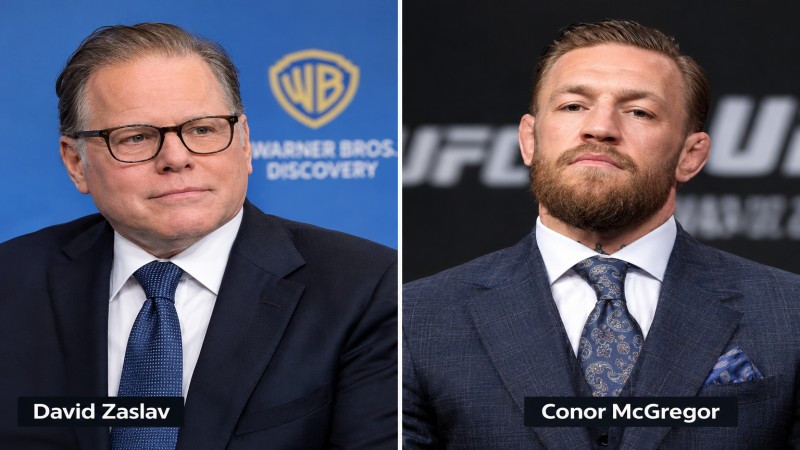
The worlds of entertainment and professional sports are shaped by people who understand how to attract audiences, build recognizable brands, and turn public attention into long-term opportunities. David Zaslav, a prominent media executive, and Conor McGregor, an internationally recognized mixed martial artist, represent two different paths to influence. One built his career managing television networks and entertainment businesses, while the other became famous through competition, confidence, and achievements inside the fighting arena.
Although their professions differ considerably, both illustrate how leadership, strategic decisions, and public recognition can influence modern entertainment. Understanding their backgrounds provides insight into the relationship between media businesses, sports promotion, celebrity culture, and commercial success.
Who Is David Zaslav?
David Zaslav is an American media executive best known for leading Warner Bros. Discovery. His career has involved television programming, business development, corporate strategy, and the management of major entertainment brands.
Before becoming widely associated with Warner Bros. Discovery, Zaslav developed experience in broadcasting and cable television. His professional background combines legal education with executive management, giving him experience in both business operations and corporate decision-making.
Early Career and Education
Zaslav earned his undergraduate degree from Binghamton University and a law degree from Boston University School of Law. He initially worked as an attorney before moving into television and media management.
His career at NBCUniversal included executive responsibilities related to cable television and distribution. During this period, he contributed to the development and expansion of television businesses that reached audiences across different markets.
In 2006, he moved into a senior leadership role at Discovery Communications. He became its president and chief executive officer in 2007, beginning a period of leadership focused on expanding its networks, developing recognizable programming brands, and adapting to changes in television consumption.
Leadership at Warner Bros. Discovery
A major milestone in Zaslav’s career came in April 2022, when WarnerMedia and Discovery combined their businesses to create Warner Bros. Discovery. Zaslav led the company following the transaction.
The combined organization brought together a broad collection of entertainment assets, including film and television production, streaming services, news, lifestyle programming, and sports broadcasting.
His responsibilities extend beyond choosing individual programs. They include overseeing corporate strategy, managing business operations, allocating resources, and navigating changes in how audiences watch content.
The entertainment industry has experienced significant disruption as viewers have moved from traditional cable subscriptions toward streaming platforms and on-demand entertainment. Companies must balance production costs, subscription revenue, advertising, and the long-term value of their intellectual property.
Zaslav’s leadership is closely connected to these challenges. His decisions illustrate the difficult balance between maintaining established entertainment businesses and developing models that can compete in a rapidly changing market.
Who Is Conor McGregor?
Conor McGregor is an Irish mixed martial artist who became one of the most recognizable personalities in combat sports. Known by the nickname “The Notorious,” he gained international attention through his fighting ability, outspoken personality, and memorable promotional appearances.
Born in Dublin, Ireland, McGregor began pursuing martial arts while working toward a professional career. He entered professional mixed martial arts in 2008 and eventually joined the Ultimate Fighting Championship, commonly known as the UFC, in 2013.
Rise Through Professional Fighting
McGregor’s early career demonstrated his ability to combine technical skill with aggressive performances. He developed a reputation for striking, precise timing, and confidence when facing opponents.
His breakthrough in the UFC came through a series of victories that positioned him among the organization’s leading featherweight contenders.
In December 2015, he defeated José Aldo to become the undisputed UFC featherweight champion. The knockout occurred just 13 seconds into the contest, making it one of the most memorable moments of his career.
In November 2016, McGregor defeated Eddie Alvarez to win the UFC lightweight championship. This achievement made him the first fighter in UFC history to hold championship titles in two weight divisions simultaneously.
These accomplishments helped transform him from a successful athlete into a global sports personality.
Beyond the Octagon
McGregor’s influence extends beyond competition. His public image, interviews, promotional appearances, and commercial activities have helped him build a recognizable personal brand.
His business interests have included ventures in the beverage and hospitality sectors. He has also attracted attention through his 2017 professional boxing match against Floyd Mayweather Jr., which introduced him to an even broader audience outside mixed martial arts.
However, commercial visibility and sporting performance are different measures of success. An athlete’s business ventures can continue to attract interest even when injuries, defeats, or time away from competition affect their performance.
McGregor’s career illustrates how an athlete can become a public figure whose influence extends into entertainment, business, and popular culture.
What Connects These Two Public Figures?
The phrase David Zaslav and Conor McGregor brings together two people whose professional achievements developed in different environments. There is no need to assume that they share a direct business partnership or personal connection to understand why comparing their careers can be interesting.
Both operate within industries where public attention has substantial commercial importance.
Zaslav works at the organizational level, overseeing media assets, distribution strategies, and entertainment businesses. McGregor operates at the individual level, using athletic performance and public recognition to strengthen his position in sports and commercial markets.
Their careers highlight several common themes.
1. Building a Recognizable Identity
Media companies need brands that audiences recognize and trust. A network becomes valuable when viewers associate it with particular types of programming, while a streaming service must give people reasons to subscribe.
Professional athletes face a related challenge. Their names, competitive records, personalities, and public appearances contribute to how fans recognize them.
McGregor’s nickname, distinctive promotional style, and major championship victories helped create a memorable identity. Similarly, Zaslav’s executive role is associated with the management and strategic direction of a major collection of entertainment brands.
The methods are different, but both examples show how recognition can create opportunities.
2. Understanding the Audience
Entertainment executives must consider what viewers want to watch, how they discover programs, and whether advertisers or subscribers will support the content.
Athletes and their teams must understand what motivates fans, including competition, compelling rivalries, memorable performances, and the emotional experience of following a career.
Audience interest does not automatically guarantee financial success. Companies must manage expenses and revenue, while athletes must balance training, performance, sponsorships, and other commitments.
Still, understanding an audience is an important part of operating successfully in either industry.
3. Turning Attention Into Commercial Value
Media companies generate revenue through several channels, which can include advertising, subscriptions, licensing, and distribution agreements.
Athletes may generate income through fight purses, sponsorships, promotional arrangements, appearances, and business ventures. The precise sources and amounts vary from person to person and from one contract to another.
In both cases, visibility can create opportunities, but it must be supported by sound decisions. A large audience does not guarantee profitability, and a recognizable name does not eliminate financial or operational risks.
The difference lies in the scale and structure of the work: one involves managing a complex organization, while the other involves developing an individual career and related business interests.
How Media Coverage Influences Sports Popularity
Modern sports depend on more than the action that takes place during a match or fight. Broadcasting, digital video, interviews, documentaries, and social media all contribute to how audiences discover athletes and follow their careers.
Media companies help bring sporting events to viewers through television agreements, streaming platforms, and other distribution channels. For sports organizations, reaching a wider audience can increase exposure, attract sponsors, and create new commercial opportunities.
This relationship helps explain why the careers of David Zaslav and Conor McGregor are relevant to a broader discussion of entertainment and sports.
Media executives make decisions about programming, distribution, and investment. Athletes generate the performances and personalities that attract audiences to sporting events. Both roles contribute to the larger entertainment ecosystem, although their responsibilities and financial arrangements differ.
The Importance of Sports Broadcasting
Sports broadcasting provides viewers with access to competitions they might otherwise be unable to watch. It also creates opportunities for analysis, interviews, highlights, and behind-the-scenes programming.
For media companies, sports rights can help attract and retain audiences. However, acquiring those rights can be expensive, and the commercial outcome depends on factors such as audience demand, advertising revenue, subscription numbers, and contract terms.
For athletes, broadcast exposure can increase recognition and strengthen their public profiles. Yet exposure alone does not guarantee championship success, sponsorship income, or lasting popularity.
The relationship between sports and media is therefore based on mutual benefits, with both sides facing commercial risks.
Different Leadership Styles and Professional Challenges
Comparing these careers also reveals how professional success depends on different forms of decision-making.
David Zaslav’s Corporate Approach
Zaslav’s responsibilities involve decisions that affect employees, shareholders, creative teams, distributors, and audiences. Managing a major media organization requires balancing competing priorities while responding to changing market conditions.
Some of the key challenges facing a media executive include:
-
Financial planning: Managing production budgets, operating costs, and revenue expectations.
-
Content strategy: Determining which programming and entertainment properties deserve investment.
-
Digital transformation: Adapting to streaming, changing viewing habits, and new technologies.
-
Organizational leadership: Coordinating different teams and businesses under a common strategy.
These responsibilities require long-term planning, negotiation, and the ability to respond when business conditions change.
Conor McGregor’s Competitive Approach
McGregor’s profession demands a different set of skills. Mixed martial arts requires physical conditioning, technical preparation, tactical awareness, and the ability to make decisions under pressure.
His career also demonstrates the importance of managing public expectations. A high-profile fighter may face intense scrutiny following a defeat, injury, canceled event, or extended absence from competition.
The main challenges in a professional fighting career include:
-
Training and preparation: Maintaining fitness and refining technical skills.
-
Competition management: Choosing appropriate fights and preparing for different opponents.
-
Recovery: Managing injuries and allowing sufficient time for rehabilitation.
-
Career planning: Balancing sporting goals with commercial opportunities.
Both professions require discipline, but the risks are different. Corporate leaders manage organizations and financial decisions, whereas fighters face direct physical risks and the uncertainty of athletic performance.
Public Reputation, Success, and Long-Term Influence
Public reputation can affect the opportunities available to both executives and athletes. However, reputation is not fixed, and it can change as new decisions, achievements, or controversies emerge.
For a corporate executive, reputation may depend on business performance, strategic choices, relationships with employees, and confidence among investors and business partners.
For a fighter, reputation often depends on competitive achievements, conduct, relationships with fans, and performances against respected opponents.
David Zaslav and Conor McGregor also illustrate an important distinction between professional achievement and public popularity. A person may receive substantial media attention without every business decision or sporting result being successful.
Long-term influence usually depends on more than publicity. It involves a record of accomplishments, the ability to adapt, and decisions that continue to matter after a particular moment of attention has passed.
Neither career should be judged solely through headlines, social media discussions, or public perception. Reliable information about professional roles, documented achievements, and business developments offers a stronger basis for understanding their impact.
What Their Careers Teach About Modern Success
Although their professional paths are different, several practical lessons can be drawn from their experiences.
First, specialization matters. Zaslav developed expertise in media management, while McGregor built his reputation through mixed martial arts. Both pursued demanding careers that required sustained effort.
Second, communication can create opportunities. Clear messaging helps business leaders explain strategy, while athletes use interviews and public appearances to connect with fans. Communication is most effective when supported by credible performance.
Third, success requires adaptation. Media businesses must respond to changing technology and consumer preferences. Athletes must adjust training, tactics, and career plans as circumstances change.
Fourth, visibility should support a larger goal. Public attention can create opportunities, but lasting success requires effective execution. Companies must deliver value to audiences, and athletes must prepare to compete at the highest level their abilities permit.
Finally, both careers demonstrate that success is rarely the result of a single decision. It develops through experience, preparation, opportunity, and the ability to respond to setbacks.
Conclusion
The careers of David Zaslav and Conor McGregor offer two distinct perspectives on leadership, recognition, and commercial influence. Zaslav’s professional journey reflects the complexities of managing major entertainment businesses during a period of industry transformation. McGregor’s journey demonstrates how athletic performance, personal branding, and business interests can combine to create an international sports personality.
Their professions should not be treated as interchangeable, and their public profiles do not establish a direct partnership between them. Instead, their careers provide useful examples of how influence develops in different sectors of modern entertainment.
Ultimately, corporate leadership and professional sport share a need for preparation, strategic thinking, adaptability, and effective communication. Understanding these similarities, while respecting the differences between their work, provides a more balanced view of their achievements and their place in popular culture. See more
5. Frequently Asked Questions
1. Who is David Zaslav?
David Zaslav is a media executive who serves as president and chief executive officer of Warner Bros. Discovery. He previously led Discovery Communications and held executive positions at NBCUniversal.
2. Who is Conor McGregor?
Conor McGregor is an Irish mixed martial artist known for winning UFC championships in the featherweight and lightweight divisions. He is also recognized for his business activities and international public profile.
3. Are David Zaslav and Conor McGregor business partners?
There is no established partnership identified in the sources used for this article. Their careers are discussed together as examples of influence in entertainment and professional sports, not as evidence of a shared business venture.
4. How do their careers differ?
Zaslav focuses on corporate leadership, media operations, and entertainment strategy. McGregor built his career through professional fighting and subsequently pursued commercial opportunities connected to his public profile.
5. What can readers learn from their professional journeys?
Their careers illustrate the importance of specialization, preparation, adaptability, communication, and long-term planning. They also demonstrate that public recognition and lasting professional success are related but distinct concepts.