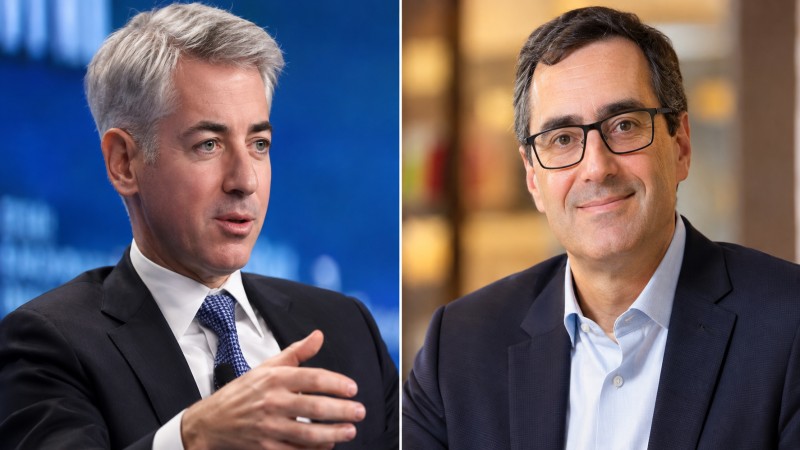
Business leaders influence companies in different ways. Some focus on investments, shareholder value, and corporate strategy, while others build consumer brands, manage global operations, and lead large organizations through periods of change. Comparing these approaches can help readers understand how decisions made by investors and executives shape major businesses.
Bill Ackman and Miguel Patricio are two prominent figures in the corporate world whose professional histories intersect through the broader Kraft business story. Ackman is an investor known for his activist investment strategy, while Patricio is an experienced consumer-goods executive who led Kraft Heinz as chief executive officer from 2019 to 2023.
Although both have been associated with the Kraft name, their roles have been different. Understanding their careers requires looking at their professional backgrounds, approaches to leadership, and the distinction between an investment connection and a direct business partnership.
Who Is Bill Ackman?
Investor, entrepreneur, and corporate strategist
Bill Ackman is an American investor and the founder and chief executive of Pershing Square. He established the investment firm in 2003 and became known for taking significant positions in publicly traded companies, researching their business performance, and advocating changes he believes could increase long-term shareholder value.
Unlike executives who oversee a company’s daily operations, Ackman primarily evaluates businesses from an investment perspective. His work involves examining financial performance, management decisions, competitive advantages, and opportunities to improve a company’s long-term prospects.
His career and investment philosophy
Ackman studied at Harvard College and later earned an MBA from Harvard Business School. Before founding Pershing Square, he co-founded Gotham Partners, an investment firm that managed public and private equity portfolios.
His investment philosophy emphasizes a concentrated portfolio of businesses with durable competitive positions, predictable cash flows, and attractive valuations. Rather than spreading investments across a very large number of companies, his firm focuses on selected opportunities that receive substantial research and analysis.
Several principles help explain his approach:
-
Fundamental research: Examining a company’s financial statements, competitive position, and business model.
-
Long-term value: Looking beyond short-term market movements to assess a company’s future potential.
-
Corporate engagement: Communicating with company leadership and advocating changes when an investor believes they could improve performance.
-
Risk assessment: Evaluating both the potential rewards and the possibility of losing capital.
Activist investing can attract public attention because it may involve disagreements over management, strategy, governance, or capital allocation. However, an investor’s proposals do not automatically produce the desired outcome. Their success depends on execution, market conditions, and the company’s underlying business strength.
Who Is Miguel Patricio?
Global consumer-goods executive and former Kraft Heinz CEO
Miguel Patricio is a Portuguese business executive whose career has centered on marketing, brand development, and international consumer-goods management. Before joining Kraft Heinz, he held senior positions at Ambev and Anheuser-Busch InBev, building experience across different markets and business environments.
Kraft Heinz appointed Patricio chief executive officer effective July 1, 2019. His appointment reflected the company’s interest in strengthening its consumer focus, brand management, innovation, and revenue growth. He served as CEO through December 2023.
Experience in global brand management
Patricio’s professional background differs from Ackman’s investment-focused career. His experience comes from working within operating companies, where leadership decisions affect products, employees, distribution networks, marketing budgets, and customer relationships.
Before joining Kraft Heinz, he held leadership roles at AB InBev, including global chief marketing officer from 2012 to 2018. He also worked in regional leadership positions across North America and Asia-Pacific.
This experience gave him exposure to the challenges of managing brands across markets with different customer preferences, competitive pressures, and commercial conditions.
His professional strengths include:
-
Brand strategy: Building clear identities for consumer products.
-
International management: Coordinating business priorities across different markets.
-
Consumer understanding: Using customer needs to inform product and marketing decisions.
-
Organizational leadership: Aligning teams around commercial goals and operational priorities.
For a company that owns established food brands, these capabilities can be especially important. Familiar products may have strong recognition, but their continued success depends on quality, pricing, distribution, changing consumer preferences, and effective marketing.
How Their Careers Connect Through the Kraft Business Story
The professional connection between these two figures is best understood through the history of Kraft-related businesses rather than an assumed personal relationship.
Ackman’s investment activities included involvement with Kraft Foods before the formation of Kraft Heinz. In 2010, Pershing Square was reported to have built a stake in Kraft Foods during the company’s pursuit of Cadbury. Years later, Patricio joined Kraft Heinz as CEO in 2019.
These events place their careers within a broader corporate history involving food brands, investment decisions, acquisitions, and executive leadership. They do not, by themselves, demonstrate that the two men worked together directly.
Investment involvement versus executive responsibility
The distinction between their professional roles is essential.
Ackman’s work centers on evaluating businesses as investment opportunities. An investor may assess whether a company is undervalued, whether its management is making effective decisions, or whether a different strategy could improve returns.
Patricio’s work at Kraft Heinz involved running the business. A CEO must consider product performance, operating costs, employee development, retailer relationships, marketing effectiveness, and long-term competitiveness.
The difference can be summarized as follows:
| Area | Bill Ackman | Miguel Patricio |
|---|---|---|
| Primary professional role | Investor and investment-firm leader | Consumer-goods executive |
| Main focus | Investment returns and business value | Operations, brands, and business growth |
| Decision-making perspective | Shareholder and portfolio perspective | Company-wide management perspective |
| Key expertise | Financial analysis and corporate engagement | Marketing and international leadership |
| Kraft-related context | Earlier investment involvement in Kraft Foods | CEO of Kraft Heinz from 2019 to 2023 |
The comparison illustrates how financial investors and corporate executives can influence the same industry from different positions, even when they are not direct partners.
Understanding Kraft Heinz and Its Business Challenges
Kraft Heinz is a major food company associated with familiar packaged-food brands. Its business combines manufacturing, distribution, marketing, and brand management on a large scale. Like other established food companies, it must balance its historical strengths with changing consumer expectations and competitive pressures.
Patricio became CEO at a time when the company was working to strengthen its business performance and develop a more consumer-focused approach. His background in international marketing offered experience relevant to these priorities.
Why established food brands need strategic leadership
Recognizable brands can provide a competitive advantage, but brand awareness alone does not guarantee growth. Companies must continually evaluate whether their products meet customers’ needs and offer appropriate value.
Important considerations include:
-
Changing preferences: Consumers may seek healthier options, convenient packaging, different flavors, or products that fit their budgets.
-
Pricing decisions: Higher production and distribution costs can affect prices, demand, and profit margins.
-
Product innovation: Established brands need relevant product improvements and new offerings without weakening their identity.
-
Retail relationships: Manufacturers must work with retailers to maintain distribution, shelf space, and competitive positioning.
-
Operational efficiency: Better processes can help companies manage costs while protecting product quality.
These responsibilities show why a consumer-goods CEO needs more than marketing knowledge. Leadership must connect customer insights with manufacturing, finance, supply-chain management, and strategic planning.
The importance of long-term business value
Investors and executives both care about a company’s long-term prospects, although they evaluate them differently.
An investor may examine whether a business can generate reliable cash flow and whether its stock price reflects its underlying value. A CEO must determine how the company can actually generate that cash flow through its products, people, and operations.
For example, if a food brand loses market share, an investor might question whether the market has underestimated the company’s recovery potential. An executive would need to investigate the reasons behind the decline, which could include pricing, product quality, distribution, or competitors’ marketing.
Both perspectives can contribute to a better understanding of a business, but neither guarantees a successful turnaround.
Comparing Their Leadership Styles
The careers of Bill Ackman and Miguel Patricio illustrate two different forms of leadership: influencing a company from the investment side and managing it from within.
Ackman’s research-driven approach
Ackman’s investment approach relies on detailed analysis, selective investments, and engagement with company leadership. Investors using this model seek to identify businesses whose value may improve through better strategic decisions, more effective management, or changes in capital allocation.
This approach can encourage companies to examine difficult questions, including whether their assets are being used efficiently or whether their existing strategy is producing adequate returns.
However, activist investing can also create tension. Management teams may disagree with an investor’s recommendations, and a strategy that looks attractive financially may be difficult to implement operationally.
Patricio’s consumer-focused approach
Patricio’s experience reflects the demands of leading a global consumer-products organization. His professional background emphasizes brand building, marketing, and commercial execution.
A consumer-focused executive needs to understand why customers choose one product over another, how purchasing habits change, and which investments can improve a brand’s relevance.
This work also involves coordinating many departments. A successful marketing campaign, for instance, may increase demand, but the company must have sufficient production capacity and distribution to serve customers effectively.
The broader lesson is that strategy must be matched with execution. A promising business plan delivers limited value if the organization cannot put it into practice.
What Business Readers Can Learn From Their Careers
Examining these two professional paths offers practical lessons for investors, entrepreneurs, and managers.
1. Understand a business before judging it
A company’s reputation, stock price, or leadership team tells only part of the story. Strong analysis requires looking at its financial position, customers, competitors, and long-term risks.
Investors should avoid relying entirely on headlines or short-term market movements. Business owners should apply the same discipline before making major decisions.
2. Connect strategy with customer needs
Patricio’s career demonstrates the importance of understanding consumers in a competitive market. Businesses need to know who their customers are, what those customers value, and why they might switch to alternatives.
Useful questions include:
-
What problem does the product solve?
-
Why would a customer choose it over a competitor?
-
Is the price appropriate for the intended audience?
-
What feedback indicates that the product needs improvement?
Answering these questions can help businesses make more informed decisions about product development and marketing.
3. Measure performance rather than relying on assumptions
Ambitious plans require measurable objectives. Companies can monitor revenue growth, profitability, customer retention, operating costs, and market share to determine whether their strategies are working.
The right measurements depend on the business. A short-term increase in sales, for example, may not indicate sustainable progress if it comes at the expense of profitability.
4. Recognize that leadership involves trade-offs
Every major decision has potential benefits and costs. Reducing expenses might improve margins but harm product quality if handled poorly. Increasing marketing investment might strengthen a brand but fail to deliver if the product does not meet expectations.
Good leaders identify these trade-offs, examine the available evidence, and adjust their plans when results differ from expectations.
5. Distinguish public association from a direct relationship
Business reporting often discusses investors, executives, and companies in the same context. That does not necessarily mean the individuals have a personal relationship, partnership, or shared business venture.
When researching executives, readers should distinguish documented roles and transactions from assumptions based on industry connections. This is particularly important when multiple companies have related names or share a complicated corporate history.
Are Their Professional Approaches Complementary?
In theory, an investor’s financial perspective and an executive’s operational experience can provide complementary insights into the same company.
An investor may identify a gap between a company’s market valuation and its potential business value. An executive may understand the practical steps required to improve products, distribution, or profitability.
However, successful collaboration requires clear responsibilities, reliable information, and agreement on priorities. Investor pressure does not automatically lead to better management, just as strong operational expertise does not guarantee attractive investment returns.
There is no need to assume that these individuals collaborated directly to recognize the broader lesson. Their separate careers illustrate how different professional skills can shape corporate decision-making.
For readers studying business leadership, the most useful comparison is between the responsibilities associated with allocating capital and those associated with operating a company. Both require careful judgment, but each faces different risks and measures of success.
Conclusion
The careers of these two business figures offer a useful perspective on investment strategy, corporate management, and the food industry’s competitive environment. Ackman built his reputation through investment research and shareholder engagement, while Patricio developed extensive experience in global marketing and consumer-goods leadership before becoming Kraft Heinz CEO.
Bill Ackman and Miguel Patricio are connected in the broader Kraft business context through different professional roles and periods. Publicly available career histories support that distinction, but the association should not be mistaken for evidence of a direct partnership.
Their professional backgrounds ultimately highlight two important principles: businesses need sound financial decisions, and they also need effective execution. Understanding both perspectives helps readers evaluate corporate strategy more carefully and appreciate the different skills required to create sustainable business value. See more
5. Frequently Asked Questions
1. Who is Bill Ackman?
Bill Ackman is an American investor who founded Pershing Square in 2003. He is known for fundamental investment research and engaging with companies to advocate changes he believes may improve shareholder value.
2. Who is Miguel Patricio?
Miguel Patricio is a Portuguese business executive with extensive experience in marketing and consumer goods. He served as Kraft Heinz CEO from July 2019 through December 2023.
3. What connects these two business figures?
Their professional histories intersect through the broader Kraft business story. Ackman was involved in Kraft Foods as an investor before Patricio became CEO of Kraft Heinz.
4. Did they work together at Kraft Heinz?
The public career records cited here do not establish that they worked together directly at Kraft Heinz or had a formal business partnership. Their association should be understood in its historical corporate context.
5. What can entrepreneurs learn from their careers?
Entrepreneurs can learn the importance of financial analysis, customer understanding, long-term planning, and effective execution. Sustainable business performance generally requires both sound strategic decisions and the ability to implement them successfully.